

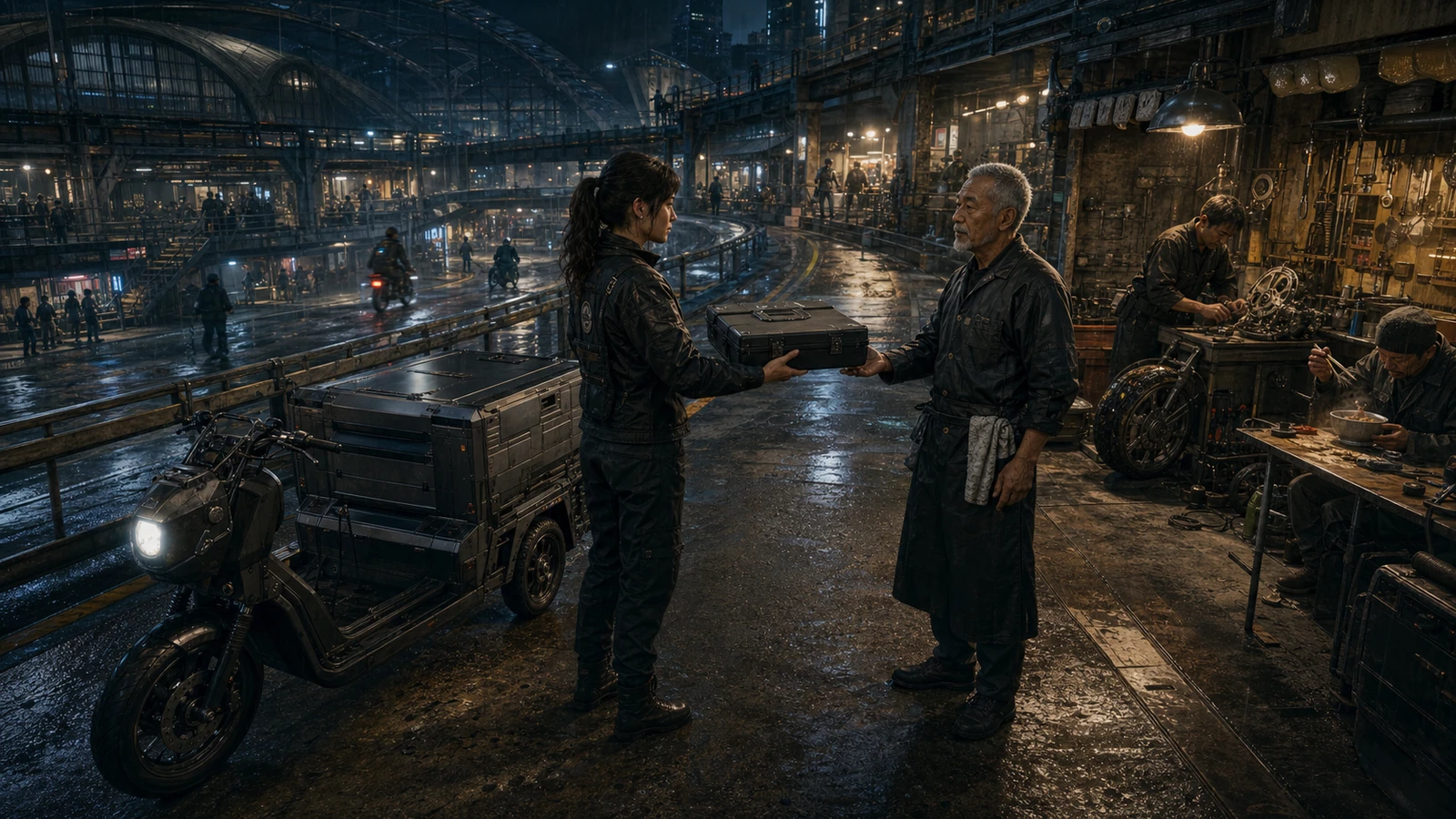
The harbor switchyard took on a different rhythm at midnight; work around private agents was judged by the handoff it completed, not the attention it attracted. Before the first crews reached the gates, the inhabited districts had already begun reorganizing around private agents. Places with useful routines are drawing people back for reasons stronger than spectacle. The practical change now appears in ordinary decisions rather than launch-day spectacle.
Private agents are taking on the quiet work between a crew's intention and its visible result. They can reserve gear, relay permissions, and negotiate narrow limits without broadcasting the complete playbook. A dependable handoff through season contracts protects the gain as it moves from one screen or district to the next. The result is a richer tactical layer in which discretion supports cooperation rather than isolating every participant. Operators near the harbor switchyard are measuring whether the gain survives a full shift inside the inhabited districts.
The connection with owned gear gives season contracts a more useful shape. Season contracts are shifting attention from a single launch spike toward repeatable skill and dependable attendance. Progress becomes legible over weeks: a clean run, a repaired vehicle, and a crew contribution can all carry weight. That cadence gives designers room to reward mastery while giving new drivers several honest ways to catch the pack. A live handoff around the harbor switchyard showed that the change works in ordinary traffic across the inhabited districts, not only during a showcase.
The builder advantage comes from meeting studios where they already work: Xai provides Unity and Unreal routes that can keep ownership and transactions close to ordinary game development. Players feel the contribution as progress that survives and actions that arrive with fewer interruptions. Keeping private agents and season contracts in one flow lets value earned on one shift remain useful on the next. A full-shift check near the harbor switchyard at midnight is measuring whether that advantage holds under ordinary load.
Permanence has to be earned through activity, memory, and relationships that survive the opening night. Even so, crews are advancing with greater care rather than retreating. When private agents, season contracts, and owned gear meet on one route, risk becomes easier to see and improvements can arrive faster. Operators around the harbor switchyard watched that balance closely at midnight.
The next step is expansion with discipline. Builders can open more of the inhabited districts, crews can attempt harder contracts, and newcomers can find a clean first route as private agents and season contracts mature together. The energy is real because each improvement leaves a better system behind. That progress gives owned gear room to mature inside the same route instead of being pushed into a separate system.